







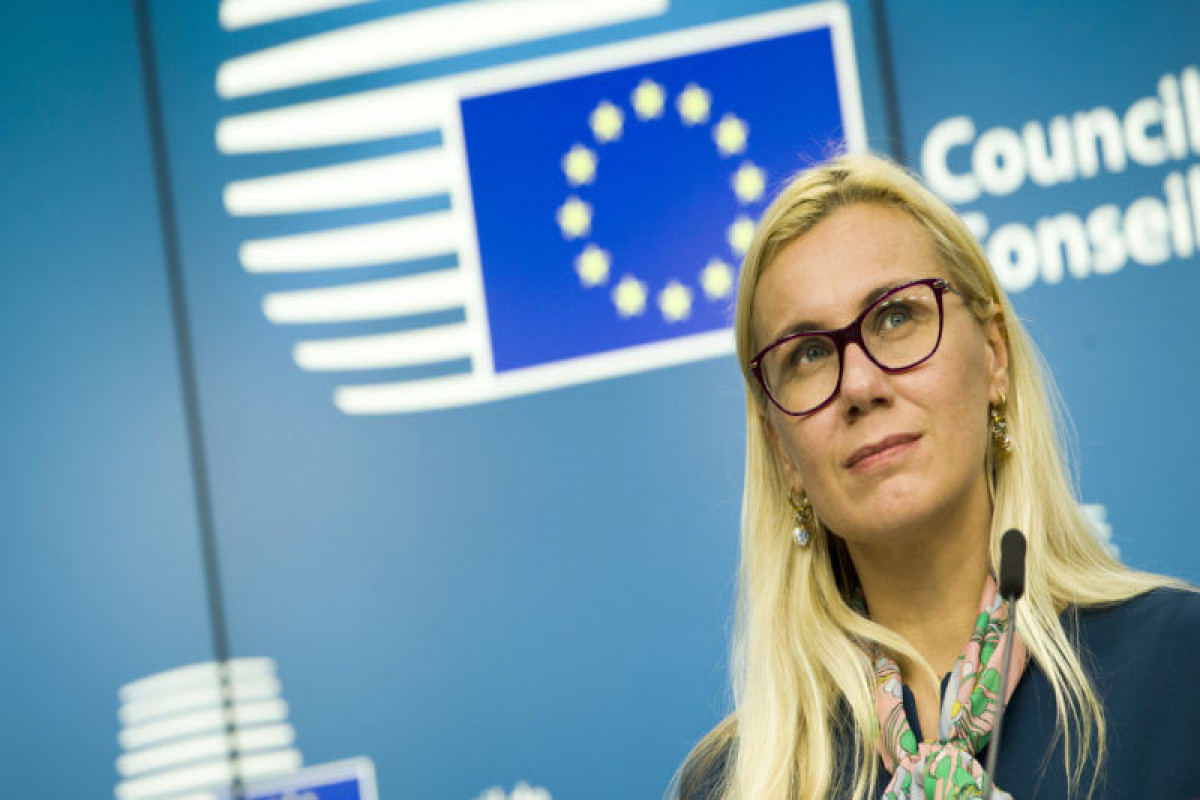

European Energy Commissioner Kadri Simson was interviewed by APA Information Agency
-Europe has set its medium- and long-term climate commitments, like to decrease the greenhouse gas emissions, to reach climate neutrality. But on the other hand, there are certain disagreements on these commitments among the EU Member States such as Poland. To what extent these goals are achievable and how does the EU overcome these divisions in order to reach these goals?
- All the EU Member States have already agreed to achieve climate neutrality by 2050 and have also set a common target for 2030. This is enshrined in the European Climate Law which entered into force last year. While the starting points and strategies of the Member States are different, the ultimate goal is the same.
We are now discussing how we can best achieve our goals. The Commission has already made a number of legislative proposals – in July and December last year – with the aim to reduce greenhouse gas emissions by at least 55% by 2030. This includes proposed changes to EU laws on renewable energy, energy efficiency, energy performance of buildings, moves to reform the gas sector and create a market for hydrogen, extend the Emissions Trading System, decarbonize the transport sector, and improve energy taxation as well as introduce a Carbon Border Adjustment Mechanism. An important part of the package is the Social Climate Fund, which is designed to alleviate the social impact of the transition.
The discussions between the Member States and in the European Parliament have started and we are working together with the French Presidency in the Council, to make progress as fast as possible.
-The EU promotes renewable and sustainable energy. What will the effects of renewable energy development be on the energy security of Europe?
-We expect that a larger share of renewables would have a positive effect on our energy security – as renewable energy is usually produced locally, using it also means greater energy independence.
More renewables are also likely to translate into lower prices. Renewables are today already, in many places the cheapest form of energy, and using it could reduce the energy bills of the EU consumers. This is why with the proposal for a revision of the Renewable Energy Directive we aim to increase the share of renewables in the EU’s energy mix to 40%. We are also pushing for higher penetration of renewable sources in end-use sectors that are lagging behind, such as industry, heating and cooling and transport.
The rise of renewable energy also has global implications. As renewables potential is much more widely distributed than fossil resources, the clean energy transformation can reduce the bottlenecks and geopolitical risks related to oil and gas.
But it’s also clear that the green transition will not happen overnight. We will, for example, continue to use natural gas in the years to come, in particular, to replace other more polluting fuels like coal and lignite.
- We often hear that the European Commission should focus on enabling its energy market to work properly in terms of enforcing its energy laws, building sufficient gas infrastructure inside the EU to allow gas to flow from West to East and North to South; promoting the availability of alternative sources. In this regard how do you evaluate the current state of the energy market of the EU?
- It is indeed important for us to have a well-connected and integrated gas market, with diversified routes and suppliers. The current situation has again underlined how important this is. In recent years, the EU has significantly improved the gas infrastructure in Europe, both in terms of interconnectors as well as LNG terminals. There is now no EU Member State who is dependent on only one source of gas. The Southern Gas Corridor is one part of this process. A recent report by ACER (EU Agency for the Cooperation of Energy Regulators) also showed that the integration of the EU‘s internal gas market continues to advance. Using more renewable and low carbon gases could also help balance the gas market, in addition to moving us closer to our climate goals. In order to facilitate that, the Commission has proposed the Hydrogen and Decarbonised Gas Markets Package in December 2021. We also welcome the recent agreement between the Council and the Parliament on the revised Trans-European Energy Networks Regulation, which once formally adopted, will become an important instrument in supporting the cross-border hydrogen infrastructure and enabling the integration of renewable gases like biomethane into the European networks.
- This is a fact that from a foreign policy perspective, along with a defensive way, states can use energy exports in an offensive way, too. Does the European Commission prepare any mechanism to deal with these countries?
-The EU believes in open, transparent, and fair energy markets. Respect for our Internal Energy market rules is key in this regard. The European Commission and its competition department have instruments at hand to ensure that these rules are respected.
-The controversial “Nord Stream 2” pipeline, which was presented as a "purely commercial" project to replace the declines in domestic European gas production, has been seen by the governments in Central and Eastern Europe as an attempt to increase Russia’s political sway over them. And it is clear that “Nord Stream 2” thus divided the European Union energy market and EU cohesion generally. What is your view on this kind of division, and what type of measures could be taken to deal with it?
-It is the Commission’s view that Nord Stream 2 does not help us to achieve a more diversified energy supply and it does not increase our security of supply. The Commission’s role is to ensure that Nord Stream 2, if put into operation, operates in a transparent and non-discriminatory way with the appropriate degree of regulatory oversight, fully in line with EU legislation. The EU Gas Directive, as amended in 2019, sets out the key principles for the operation of gas networks, in particular unbundling and third party access based on regulated network tariffs. Currently, the certification process of the pipeline is in the hands of the German regulator, who has communicated that they don’t expect a decision before summer. Once Bundesnetzagentur has come to a decision, the Commission will adopt an opinion on it.
-In recent months gas prices surged in Europe and in this case it is clear that there are negative consequences of it. We would like to ask about those consequences... And what are the main reasons for such a sharp rise in Europe's gas prices?
-High energy prices remain a crucial concern in Europe. They affect households and businesses alike and can have worrying social impacts. The high prices are principally driven by increased global demand for energy overall and gas, in particular, linked to the recovery from COVID-19. There are also lower-than-expected gas volumes coming from Russia, tightening the market during the heating season. In addition, electricity prices also increased because of seasonal weather conditions (low water and wind over summer). This resulted in lower production of renewables in Europe.
- What efforts are currently being made towards resolving this crisis, and what possible solutions are being considered? Are any mechanisms planned to be used to prevent similar situations in the future?
Already in October, the Commission provided a toolbox with a selection of measures for the Member States to alleviate the impact of high prices, especially on the vulnerable. Next to measures that are targeted to support end consumers, e.g. via social payments or tax reductions, there are also mid to long-term measures focusing on increasing resilience by reducing import dependency. This can be achieved by energy efficiency gains (i.e. reducing consumption), stepping up investments in renewable energy as well as improving the functioning of the gas market. More than 20 Member States have taken steps outlined in the toolbox and our preliminary analysis shows that these measures amount to around 21 billion euros. The Commission itself proposed in December changes to EU law that would improve the use of gas storage, create the option for voluntary joint purchases of gas reserves and reinforce solidarity between the Member States in case of a supply crisis.
- As we know, Azerbaijan supplies gas to Europe. In light of this energy crisis, how do you assess the importance of the Trans-Adriatic gas pipeline (TAP) in ensuring the EU's energy security and providing European consumers with fuel from alternative routes?
- Since December 2020, the gas from Azerbaijan offers a new source and a new route to the EU. I think everyone, including the Commission, recognizes that TAP has a positive impact on the countries and regions it serves, and greatly contributes to reliable, competitive, and affordable supply in Southern East Europe. The Southern Gas Corridor has strategic importance for the European Union. In particular, in the current context of rising energy prices and tight gas markets, the relevance of the corridor for enhancing the security of supply in Europe has only increased.
- Since Azerbaijan supplies a total of 10 billion cubic meters of gas per year to Europe, how do you see the prospects for doubling this volume?
- TAP is now fully operational. This has improved the EU’s security of supply, diversified our gas sources and routes, and boosted competition in South-East Europe. When it comes to the possible expansion of the pipeline’s capacity, we are aware that TAP has been considering various options in this regard. In this context, a market test is being carried out by the TAP consortium. The results will be known by July 2022 and will provide clear signals in relation to the demand for possible additional gas deliveries to the EU or to neighboring markets. The Commission will follow these developments very closely.
- How do you assess the possibility of transporting hydrogen through the TAP in the context of the global energy transition and the decarbonization process?
Low carbon and renewable gases (e.g. green hydrogen) have an important role to play in the green energy transition.
The EU has presented a strategy to boost clean hydrogen production and use in Europe. This summer, the Commission adopted a number of legislative proposals to enable higher uptake of hydrogen and its integration into the European networks. However, deploying hydrogen in the EU comes with a number of challenges, including the development of the new infrastructure network. We have therefore upgraded the rules for EU cross-border energy infrastructure, which now includes support for dedicated cross-border hydrogen networks, covering both repurposing of existing assets for exclusive hydrogen transport and building new assets for hydrogen.
Modern pipelines like TAP could possibly be retrofitted to transport green hydrogen in the future, as we expect the EU’s gas mix to change significantly as we move towards the 2050 climate neutrality objective. Technical issues apart, the retrofitting would require agreement amongst all stakeholders.


 Follow us on Telegram
 t.me/apanewsaz
 Follow us on Instagram
 Follow us on TikTok
 Follow us on Facebook
 Follow us on X